Child Therapy Richardson
Is your child experiencing issues that affect everyday life? I help children who struggle with emotions that feel too big and meltdowns learn how to manage the anxiety and challenges that come with growing up so that they can enjoy being kids again. Everyone needs extra support to navigate big emotions, anxiety, school stress, and life changes sometimes. As a parent, you know your child best—and when something doesn't feel quite right, reaching out for support can be a powerful step toward helping them thrive.
Children are remarkably resilient when they have the right tools, guidance, and support. Play therapy provides a safe, engaging space where children can express themselves, develop healthy coping skills, build emotional confidence, and strengthen their ability to navigate life's challenges.
No one gives you a manual telling you the best way to parent your specific child. But you don't have to have all the answers on your own. By investing in your child's emotional well-being today, you're helping them build the skills, resilience, and self-understanding they need to succeed at home, at school, and in their relationships. Together, we can support your child's growth while fostering greater connection, confidence, and harmony within your family.

Why Play Therapy May Be A Good Fit for Your Child
Adults often think of therapy as serious business, and it is. Therapy or counseling can help you change the way you think, feel, and relate to others. But that doesn’t mean that therapy can’t be playful. In fact, play therapy is often considered the most appropriate treatment for children. Young children are still learning language and often don't have the words to fully express their thoughts, feelings, or experiences. What they do have is a natural language that comes easily to them: play. Through play, children explore their world, work through challenges, and communicate what may be difficult to put into words.
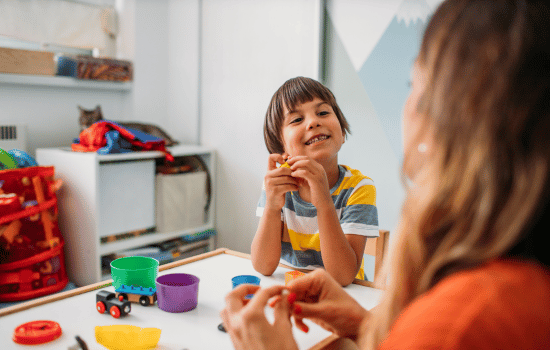
Just as adults talk in therapy, children play in therapy. In play therapy, toys, games, art materials, and imaginative play become tools for self-expression. Essentially, toys become the child’s “words.” As children play, they share their inner world in ways that feel natural, safe, and comfortable. My role is to carefully observe, support, and guide this process to help children better understand their emotions, build coping skills, and grow in confidence.
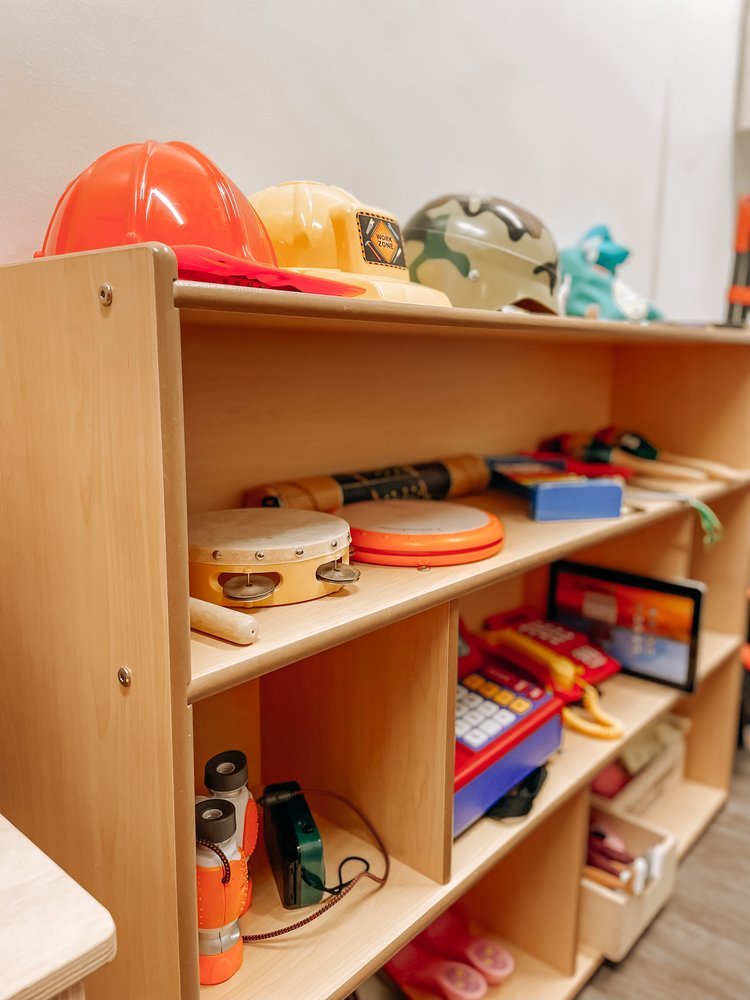
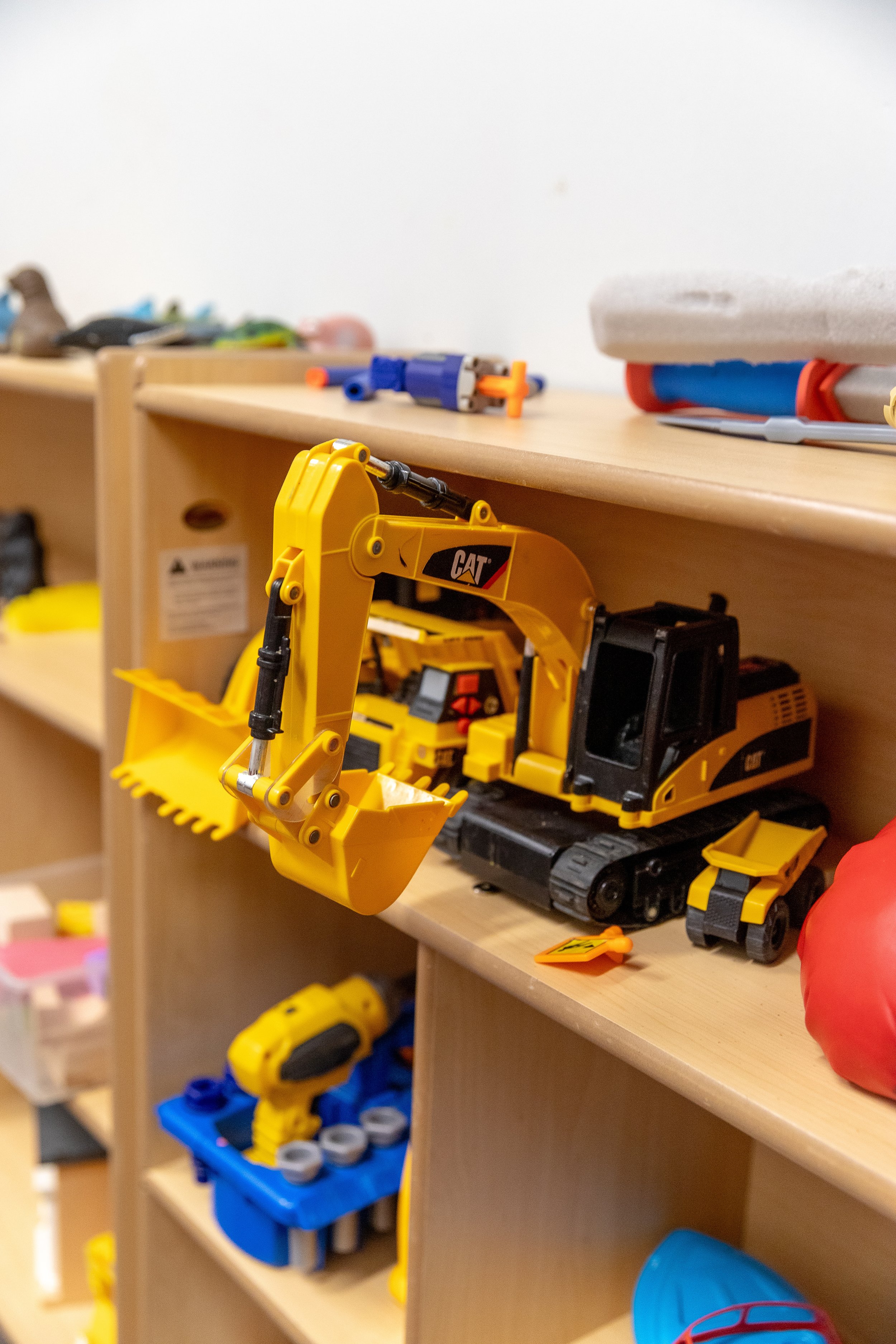
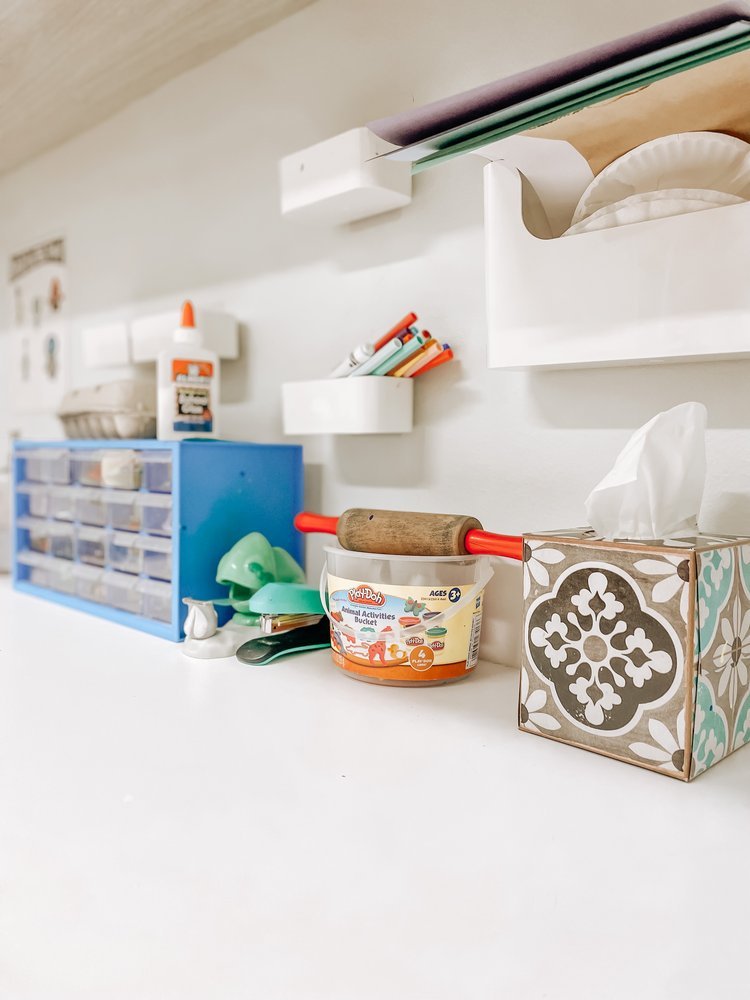
My playroom is thoughtfully designed with a variety of toys and activities that encourage children to express themselves freely. As trust develops, patterns often emerge in a child's play that provide valuable insight into their experiences, emotions, and needs. Together, we use these themes to better understand the challenges they may be facing and identify new ways to respond to them.
By creating a safe, supportive environment where children can explore feelings, practice new skills, and discover their strengths, play therapy helps them develop healthy ways to navigate emotional, social, and behavioral challenges—both now and as they continue to grow.
Benefits of Play Therapy
Some children benefit from extra support as they navigate common developmental challenges, while others may be coping with anxiety, trauma, grief, life transitions, or other mental health concerns. Whatever the reason for seeking therapy, counseling can provide children with a safe space to better understand themselves and develop skills that support their emotional well-being.
Play therapy specifically is one of the best treatments for children of all ages, genders, and cultural backgrounds. Not only does it benefit the child, but child counseling also benefits the entire family. As children develop new ways to understand their emotions, manage challenges, and respond to difficult situations, families often experience greater connection, improved communication, and a more peaceful home environment. Play therapy can help with a variety of concerns, including but not limited to:
Emotional Adjustment and Coping Skills
Parents and teachers often notice positive changes in areas such as emotional regulation, communication, and problem-solving. Rather than becoming frustrated or discouraged and giving up, children often become more resilient and willing to challenge themselves through therapy. Children may become better able to manage anxiety and frustration, and respond to challenges with greater confidence and self-control. As children build these skills, many experience increased confidence, improved self-esteem, and greater emotional resilience.
Behavioral Adjustment and Social Skills
Play therapy can also support the development of important social-emotional skills, including empathy, communication, responsibility, and healthy relationships. Through play therapy, children can develop a stronger understanding of their emotions and learn healthy ways to express their thoughts, feelings, and experiences. When they’re more able to express themselves, meltdowns and frustration about being misunderstood decrease and social communication improves.
Academic Achievement
The benefits often extend beyond home and into the classroom. As children strengthen their coping skills and emotional well-being, they may experience improved focus, engagement, and readiness to learn. Whether a child is already facing academic or behavioral challenges or simply needs additional support to reach their full potential, play therapy has been linked to improved overall academic achievement, reading, language, and math grades. Child counseling can help foster the skills and confidence that contribute to success both in and out of school.
Childhood and adolescence are important times for building the foundation of lifelong mental health. We know that half of all lifetime cases of mental illness begin by age 14 and 75% by age 24. Through therapy, children can learn healthy coping strategies, problem-solving skills, emotional regulation, self-awareness, and effective ways to navigate relationships and challenges. These skills not only help them manage current difficulties but also strengthen their resilience and confidence as they grow into young adults. By supporting your child early, you're investing in tools and strengths that can benefit them for years to come.
About Lindsey Bass, Child Therapist in Richardson
You want the best for your child—and sometimes that means getting a little extra support along the way. I’m Lindsey Bass, a Licensed Professional Counselor based in the Dallas, Texas area, and I specialize in working with children and adolescents. In addition to my license, I also hold the Registered Play Therapist (RPT) credential, which reflects advanced training in using play as a meaningful way for children to express themselves, process emotions, and build coping skills. Because kids don’t always have the words for what they’re feeling, I meet them where they are—through play, creativity, and connection. As both a Licensed Professional Counselor and Registered Play Therapist, I love working with children and their families to help them live more confident, happy, brighter lives.
In my work with children and families, I support a wide range of concerns, including anxiety, low self-esteem, depression, behavioral and academic challenges, and big life transitions. I believe every child is more than their struggles. Whether a child is experiencing emotional outbursts, school difficulties, trauma, or social challenges, I focus on their strengths first. Together, we build on what’s already going well while developing new tools to manage big feelings and life’s ups and downs. The result is often a child who feels more capable, more resilient, and more at ease in their world.
Whatever brings you here, whether it is a specific concern or you simply want reassurance that you’re supporting your child’s emotional development in the best way possible, my goal is to help your child feel more confident, secure, and understood—and to help you feel more equipped, connected, and supported as a parent.
Helping Young Minds Thrive at Every Stage:
Who my Play Therapy Services Are For
Child counseling can help with a broad range of issues. In my private practice, I am particularly passionate and focused on a few specific concerns, including:
Children Experiencing Anxiety
It's normal for children to worry from time to time, but for nearly 1 in 10 children, fears and worries become overwhelming or begin interfering with daily life. When anxiety affects a child's ability to attend school, participate in activities, sleep independently, or enjoy time with friends and family, then additional support may be helpful.
Children don't always have the words to describe what they're feeling. Instead, anxiety may show up as frequent stomachaches, headaches, irritability, difficulty separating from caregivers, or avoidance of situations that feel uncomfortable or uncertain. Other common signs of anxiety in children include:
Excessive worry or fear
Fear and reluctance to be alone
Fear that something bad might happen to themselves or loved ones
Worries about getting lost or kidnapped
Refusing to go attend school, activities, or social events
Panic or emotional outbursts around transitions or separation from caregivers
Frequently seeking reassurance
Separation anxiety is one of the most common forms of anxiety in childhood. Children experiencing separation anxiety may become distressed when away from caregivers, worry excessively about safety, or avoid activities that require independence.
As children grow, new stressors can emerge. Academic pressures, testing, social challenges, and increasing expectations can all contribute to anxiety and self-doubt. Through therapy, children and adolescents can develop greater self-confidence, emotional awareness, and practical coping skills to manage stress and anxiety more effectively.
I also work closely with parents, providing guidance and strategies to support their child's progress at home. Together, we can help your child feel more secure, confident, and capable while creating greater calm and connection within your family.
Children with ADHD
Children with Attention-Deficit/Hyperactivity Disorder (ADHD) experience the world a little differently. ADHD is a neurodevelopmental condition that can affect attention, impulse control, activity level, emotional regulation, organization, and social interactions. While these differences can create challenges at home, at school, and with peers, my approach to ADHD is grounded in the belief that it is more than a list of symptoms or deficits.
Many children with ADHD are bright, creative, curious, and energetic. However, they may struggle to meet expectations in environments that require prolonged focus, sitting still, following multi-step directions, or managing strong emotions. Over time, repeated frustration can impact a child's confidence and self-esteem. Therapy can help children recognize both their challenges and their strengths so they can develop confidence, resilience, and a positive sense of self.
Because children naturally communicate and learn through play, therapy doesn't have to look like sitting still and talking. In fact, play-based approaches are often especially effective for children with ADHD. Movement, creativity, and hands-on activities help keep children engaged while also supporting emotional regulation and skill development.
Through games, storytelling, role-playing, art, and other interactive activities, I help children build practical skills such as:
Managing emotions and frustration
Improving attention and focus
Developing impulse-control strategies
Strengthening social skills and peer relationships
Increasing self-awareness and self-confidence
Learning how to communicate their needs effectively
Together, we explore what feels challenging, why those challenges occur, and what tools can help. Rather than focusing solely on behavior, I help children understand their experiences and develop strategies that work with their unique strengths and learning style. I also work closely with parents to better understand ADHD, reduce conflict, and create supportive environments where children can thrive. Together, we can help your child learn to work with their brain—not against it.
Children Dealing with Low Self-Esteem and Perfectionism
As children grow, they naturally begin comparing themselves to others. Around elementary school age, many children start measuring their abilities against their peers—whether it's academics, sports, artistic talents, or social skills. Because children often think in all-or-nothing terms, they may believe that if they aren't the best at something, they aren't good at it at all.
These patterns of thinking can make it difficult for children to recognize their strengths and appreciate their progress. Instead, they may become overly focused on mistakes, perceived shortcomings, or areas where they struggle. Over time, this can contribute to low self-esteem, self-doubt, and perfectionistic tendencies.
Children who struggle with perfectionism often place tremendous pressure on themselves. They may become highly self-critical, fear making mistakes, avoid trying new things, or give up before they begin because they worry they won't succeed. What looks like a lack of motivation is often a fear of failure or disappointment.
Therapy can help children develop a healthier and more balanced view of themselves. Together, we identify their strengths, challenge unhelpful beliefs, build resilience, and develop self-compassion. Children learn that their worth is not determined by performance, achievement, or being "the best."
My goal is to help children build confidence in who they are, recognize their unique abilities, and develop the courage to try, learn, and grow. With support, children can begin to see themselves as capable, competent, and worthy—exactly as they are.
LGBTQIA+ Children and Families
As children grow, they begin developing a deeper understanding of who they are, including their interests, relationships, gender identity, and sexual orientation. For some children, questions about identity emerge at an early age. For others, these experiences may become more noticeable as they approach adolescence. Every child's journey is unique.
Exploring identity can be an exciting and meaningful part of development, but it can also bring questions, uncertainty, or challenges. Children may express themselves in ways that don't fit traditional expectations around gender, or they may begin sharing feelings about their gender identity or attraction to others. What matters most is that they feel safe, supported, and accepted as they learn more about themselves.
For many parents, conversations about gender and sexuality can feel unfamiliar or uncomfortable at first. You may worry about saying the wrong thing, wonder how best to support your child, or have concerns about how others will respond. These feelings are common, and you don't have to navigate them alone.
Research consistently shows that supportive relationships play a powerful role in the well-being of LGBTQIA+ youth. When children feel accepted and affirmed by the important adults in their lives, they are more likely to experience positive mental health outcomes, stronger self-esteem, and a greater sense of belonging.
While society has become more inclusive, LGBTQIA+ children and adolescents may still encounter misunderstanding, discrimination, or social challenges. Parents often find themselves balancing a desire to protect their child with the need to support their growing independence and identity. You may also find yourself adjusting expectations or reimagining parts of the future you once envisioned for your child.
Therapy can provide a safe, affirming space for children to explore their identity and for families to strengthen communication, understanding, and connection. Whether your child is questioning, exploring, or confidently expressing who they are, I work alongside both children and parents to foster resilience, self-acceptance, and healthy family relationships.
Parents Navigating Challenging Behaviors
Parenting is one of the most rewarding roles we can have—and one of the most challenging. When a child is struggling with big emotions, defiance, meltdowns, aggression, anxiety, or other difficult behaviors, it can leave parents feeling frustrated, exhausted, and unsure of what to do next.
Adding to the challenge, parenting advice seems to come from everywhere. Family members, friends, social media, books, and professionals often offer conflicting recommendations, making it difficult to know what will actually work for your child and your family.
The truth is that there is no one-size-fits-all approach to parenting. Every child is unique, and strategies that work for one child may not work for another. Often, parents are already doing many things well—they simply need support in understanding what their child's behavior is communicating and how to respond in ways that strengthen connection and encourage growth.
Therapy can provide a space to explore your own family history patterns that shape how you parent without judgment while building new skills and confidence. Using principles from Child-Parent Relationship Therapy (CPRT), I work alongside parents to strengthen their relationship with their child and increase their confidence in responding to challenging behaviors. You'll learn practical tools for setting limits, communicating effectively, responding to emotions, and fostering cooperation while maintaining a strong and secure connection.
My goal is not to teach you how to be a "perfect" parent. It is to help you better understand your child, trust your instincts, and develop strategies that support both your child's growth and your family's well-being. Together, we can create more connection, less conflict, and a stronger foundation for your child's success.
See Inside The Playroom
Here are a few pictures of the actual playroom at my practice so you can get an idea what it looks like.

Frequently Asked Questions about working with a child therapist in Richardson
What is the best form of therapy for kids?
The best therapy for kids is one that is developmentally appropriate and tailored to the child’s unique needs. Because children are still developing emotionally, socially, and cognitively, effective child therapy must be designed to match how a child’s brain learns, communicates, and processes emotions.
Child counseling and child therapy approaches such as play therapy and expressive arts therapy are commonly used because they align with normal child development. These evidence-informed approaches allow children to express thoughts and feelings in ways that feel natural, such as through play, creativity, movement, and storytelling.
The most effective therapy for children is not one single method, but the approach that best fits the child’s age, stage of development, personality, and presenting concerns. Some children benefit from structured, skills-based support, while others respond best to creative, play-based interventions.
As a child therapist, I work closely with parents and caregivers to determine the most appropriate type of therapy for their child. Together, we consider emotional, behavioral, and developmental needs to create a treatment plan that supports meaningful progress.
No matter the approach, my focus is on providing compassionate, evidence-based child therapy that helps children feel safe, understood, and supported while building confidence, coping skills, and emotional resilience.
I will work together with your family to determine what form of counseling is the best fit for your child.
What age is best for play therapy?
Play therapy can benefit children across a wide range of developmental stages, from early childhood through adolescence. It is a developmentally appropriate form of child therapy that uses play as a natural way for children to express thoughts, emotions, and experiences.
In my practice, I typically begin seeing children for play therapy as young as 3 years old. While play therapy is most commonly used with younger children, some older children and even adolescents may continue to benefit from play-based techniques depending on their developmental needs and comfort level.
Many children naturally begin transitioning from play therapy to more traditional talk-based or skill-focused teen counseling between the ages of 8 and 12, although this can vary widely. Some children may benefit from play therapy into early or mid-adolescence, depending on their emotional development, communication style, and presenting concerns.
If you are unsure whether play therapy or another form of child or adolescent counseling is the best fit, I offer a free consultation to help determine the most appropriate level of care for your child and family.
To learn more about therapy options for older children and teens, please visit my Teen Therapy services page.
What is the difference between a child therapist and a child psychologist?
A child therapist and a child psychologist have some similarities, and some differences. Both can provide support, help children learn how to manage big feelings, and work to improve the parent child relationship. Therapists can also diagnose many conditions. But psychologists receive additional training in assessments that mean they may be needed to diagnose certain conditions. These include specific learning differences and autism spectrum disorders.
Because their training is more broad, psychologists can also work as researchers, professors, or teachers as well as seeing patients. Therapists are usually focused only on helping clients develop skills to better adapt to their lives.
Both child counselors and child psychologists can also make recommendations for school accommodations. Depending on the school administration, some may prefer to hear from a psychologist. However, neither can prescribe medications. Only psychiatrists, psychiatric mental health nurse practitioners, and trained pediatricians can prescribe medications as part of a child's treatment.
Building Resilience for Every Age and Stage
Life can be hard at any age. It is hard to imagine your child struggling, but there are going to be challenges in their life, and learning how to deal with them early sets your child up for success. With a holistic approach to counseling, I help my clients and their families feel empowered to overcome cognitive, emotional, and behavior problems now and in the future.